
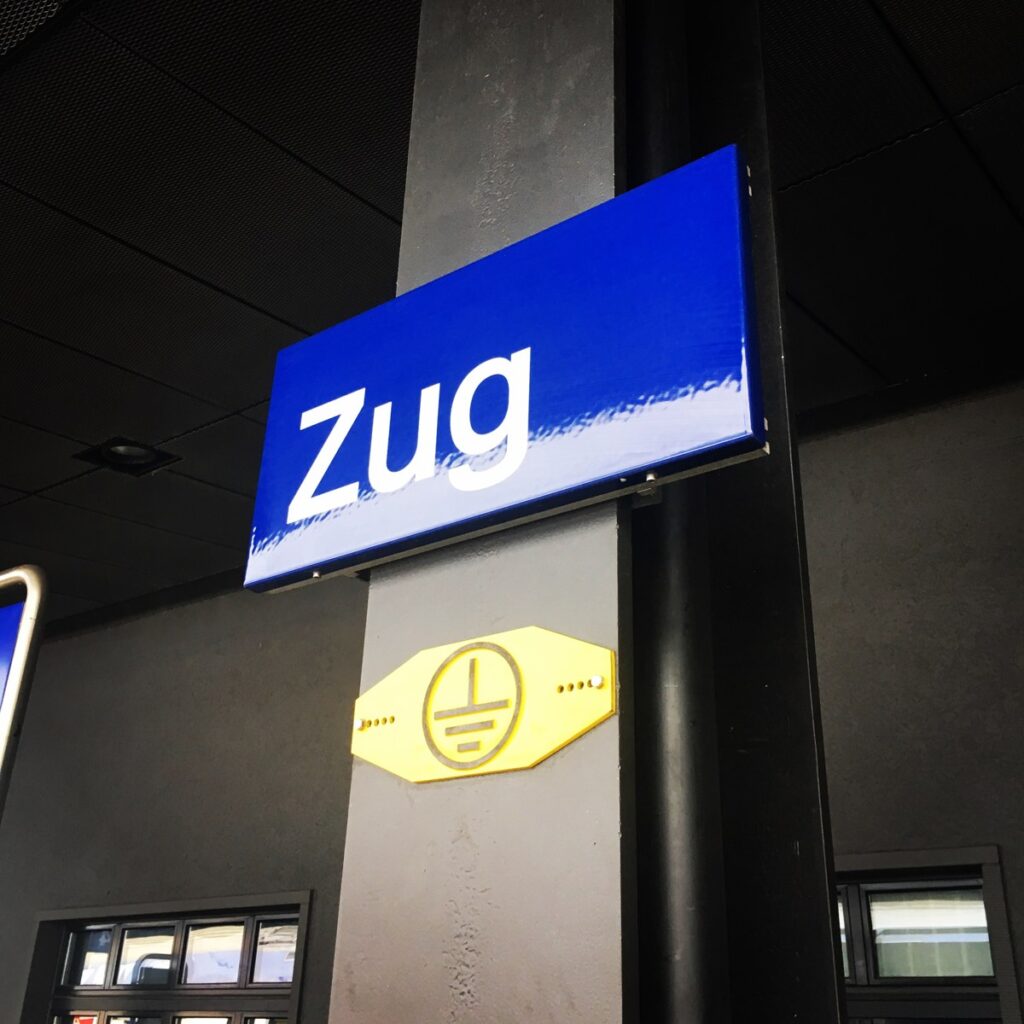
On September 2, 2017, I visited Zug, Switzerland.
Curious about the Ethereum Foundation's location, I went nearby, though I did not meet anyone. It looked to me like it might be a virtual office, and I left. I did not verify that impression; it was simply how it appeared to me then.
Ethereum has a foundation. Who, then, runs Bitcoin?
That question stayed with me. In my 2018 dialogue with Mai Fujimoto we discussed the distinction between Bitcoin, with no apparent issuer or managing body, and ICOs, which involve an entity raising funds.
I once investigated GitHub myself. Developers gathered in two places, “Bitcoin” and “Bitcoin Core,” with some names appearing in both.
But I am not an engineer. What were they doing? Who paid them? If they could change Bitcoin's rules, did that not ultimately mean Bitcoin had administrators?
This time, I explored the question with AI, tracing code and historical records.
Where Are Unmined Bitcoins?
My first question concerned private keys.
Bitcoin is described as being mined, which can make unmined coins seem like a reserve stored somewhere.
I imagined that unmined coins might be held in something like a smart contract operating Bitcoin, with someone holding its administrative private key.
If so, could that person withdraw them or alter issuance at will?
The first thing I learned was that no such vault exists.
Unmined bitcoins are not stored at an address. They are newly issued under the rules when a new block is created.
Miners include a special “coinbase transaction” stating where the reward goes. This differs from transferring bitcoins out of someone's existing holdings.
But miners cannot claim any amount they choose. Proof-of-work conditions must be met, and each full node verifies the block's validity, including the reward. A block claiming more than the permitted new issuance plus transaction fees is rejected. Issuance and Verification
Rather than a powerful person's private key authorizing issuance, each participant verifies the shared rules.
Of course, private keys exist for sending your own bitcoins. But they are not keys controlling Bitcoin as a whole.
Satoshi Also Wrote the First Program
Satoshi Nakamoto wrote the Bitcoin paper. Who created the first working program?
The public record indicates that it was Satoshi too.
More intriguingly, the code came before the paper. In a November 2008 email, Satoshi explained that he first wrote code to establish that the problems could be solved, then wrote the paper. Satoshi's Email
In January 2009, he released the first software with its source code. The Release Announcement
Early contributor Hal Finney recalled running the software and reporting bugs, which Satoshi then fixed. Hal Finney's Recollections
Hal died in 2014. Many theories concern Satoshi's identity, but identifying the person is not this article's focus.
My concern is whether the creator, whoever that was, retained special control over the system.
Early Bitcoin did have a warning-related private key called the Alert Key. It did not permit arbitrary issuance or movement of other people's funds. The alert system was retired because of centralization and security concerns. Retirement of the Alert Key
Who Are the People on GitHub?
GitHub is a workspace for collaborative software development.
Its “Organization” category does not signify a company or legal entity. It groups related code and work.
The two places I examined broadly contain the following.
| Name on GitHub | Main contents |
|---|---|
| bitcoin | Bitcoin Core software and Bitcoin Improvement Proposals (BIPs) |
| bitcoin-core | Cryptographic components, interfaces, and related development tools |
Bitcoin Core verifies transactions and blocks and descends from the original software released by Satoshi.
Developers fix bugs, improve processing, and consider features. Other developers review and test changes. Coordinators known as maintainers then incorporate changes in light of the review. Explanation of Bitcoin Core
Human judgment is involved; the process is not entirely automatic.
However, changing distributed software differs from changing the software every participant already uses. A maintainer's approval does not automatically switch all nodes to new rules.
The development guidelines expressly distinguish changes to the Core project's code from changes to network-wide consensus rules. Development Guidelines
This does not mean developers lack influence. Creating widely used software and leading technical discussions carries substantial power.
Nevertheless, a developer of widely used software is not the same as an administrator capable of controlling the entire system.
How Do Developers Earn a Living Without Mining Rewards?
This was another major question for me.
Miners receive mining rewards. But Bitcoin does not automatically pay developers merely for improving the code.
Are they all unpaid volunteers?
The answer was no.
One example is Brink, a US nonprofit that raises corporate and individual support to fund and train developers. Although not identical to a Japanese legal structure, it is broadly comparable to an NPO.
Brink's website lists supported developers and their work. Some focus on development through grants, while others participate in salaried training programs. Brink's Support Programs
Its 2025 report recorded approximately USD 1.75 million in developer salaries and grants. Brink's Annual Report
What do supporters receive in return?
Bitcoin ETF provider VanEck announced a commitment to donate 5% of its ETF profits to Brink for at least 10 years. VanEck's Announcement
Businesses built on Bitcoin return part of their profits to development. Developers maintain and verify security, with the results available to users and businesses alike.
This creates an ecosystem in which funding circulates.
Some contribute without payment. Others love the technology, share Bitcoin's philosophy, or do it professionally. Participants need not all have the same motivation.
What particularly impressed me was the development of mechanisms supporting developers' livelihoods rather than relying solely on goodwill.
Funders' influence does not disappear. Where money goes can bias research and development, and continued support is not guaranteed.
Still, a maintenance structure exists that differs from one company employing everyone and owning everything.
What Does the Ethereum Foundation Do?
This brings me back to the Ethereum Foundation that intrigued me in Zug.
The Ethereum Foundation supports research, development, security review, and development teams financially. It was an important supporter of The Merge, the transition from PoW to PoS, alongside outside companies and projects. Support for Development Teams
The directors I previously researched included Vitalik Buterin, Aya Miyaguchi, and Patrick Storchenegger. Patrick is a Swiss lawyer whose firm profile lists domestic and international taxation among his specialties—an interesting connection for someone working in tax. Patrick's Profile
However, this board composition should not simply be connected with my 2017 visit to Zug. I am not saying I met anyone there.
The origins of development funding differ from Bitcoin's.
Ethereum sold ETH in 2014 and announced allocations for early contributors and the foundation in addition to purchasers. The foundation's long-term support allocation was designed to equal 9.9% of the amount sold. The Original Sale Announcement
Assets to support development were thus provided at launch.
Bitcoin, by contrast, had no equivalent sale or initial foundation allocation. Support structures involving users and businesses developed later.
I find a distinctively Bitcoin-like beauty in those origins.
How Did Ethereum Move to PoS Without My Vote?
The existence of a foundation alone does not make me conclude that Ethereum is not a DAO.
My question concerns how decisions are made.
The Merge was not decided by a vote of all ETH holders on either a one-person-one-vote or one-ETH-one-vote basis. Researchers and developers refined specifications, several teams implemented software, and operators and others adopted it.
The official guidance at the time likewise said ordinary ETH holders needed to do nothing. The Merge Guidance
The mechanism for approving blocks under PoS is therefore different from the mechanism for deciding to switch to PoS.
The foundation did not switch everything with a single private key, and developers could not compel others to upgrade. Nevertheless, the foundation and core developers had influence in setting direction and coordinating the transition. Ethereum Governance
As a holder, I felt that a fundamental mechanism changed without my participation in the decision.
Does this not show that decentralized transaction validation and decentralized influence over policy are separate issues?
What Bitcoin's Resistance to Change Means to Me
Someone can write alternative Bitcoin software supporting PoS.
But writing it alone gives existing participants no reason to adopt it. Nodes operating under PoW rules will not accept blocks that fail those conditions.
Bitcoin is not permanently unchangeable, of course. Nor does every holder possess a veto over changes worldwide.
Still, organizing and securing broad acceptance of fundamental changes is difficult. I feel that difficulty itself contributes to predictability for holders.
Ethereum's ability to coordinate and implement major changes is a strength of its own. But I am more drawn to Bitcoin, which is difficult to reshape even according to someone's vision.
Put loosely, it feels closer to something wild.
I Consider Bitcoin a DAO
The term DAO has a range of meanings.
It can mean an organization with pooled funds and token voting, or more broadly a system operating through common rules and decentralized participants. Vitalik himself cited Bitcoin as a DAO example in a 2014 essay. The 2014 Essay
I consider Bitcoin a DAO in the latter sense.
Issuance and transaction verification follow shared rules. There is no administrator's private key allowing unrestricted control. Developers exist, but cannot by themselves impose changes on all participants.
Around that system, people and organizations with different motivations contribute money and effort to ongoing maintenance.
An ecosystem alone does not make something a DAO. What interests me is the combination of a decentralized mechanism with social support structures sustaining it.
Calling something a DAO is separate from determining whether it is an association without legal personality under Japanese corporate tax law. Bitcoin as a whole, development projects, and grant-making organizations cannot simply be treated as one entity.
My conclusion is not that Bitcoin is impressive because it operates without people.
People, organizations, and money are necessary. Yet no single entity owns and freely controls the whole system.
That is where I see the beauty of Bitcoin's decentralized autonomy.
This article provides a general explanation based on legislation as of October 1, 2026. Always obtain individual advice before implementation.
We take care in preparing this information. If you notice an error, please let us know through our contact page.
Related Articles
These articles explain related systems and practical issues.
Does a DAO Qualify as an “Association Without Legal Personality” under Japan’s Corporation Tax Act?